•  
Shia Muslim Chehlum - India

Shia Muslim Chehlum - India

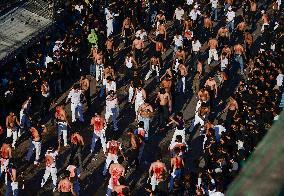
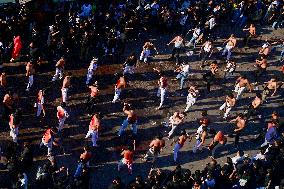
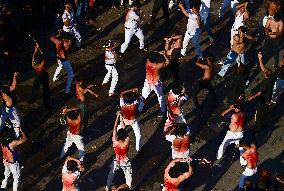
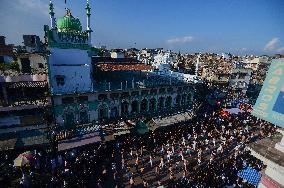
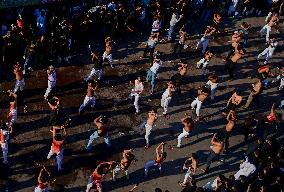
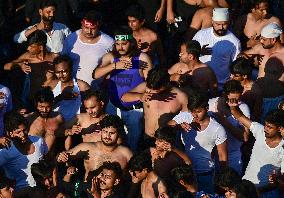
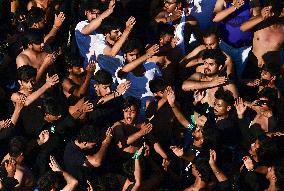
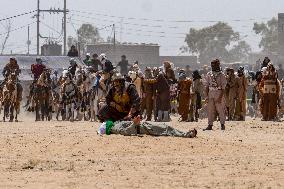
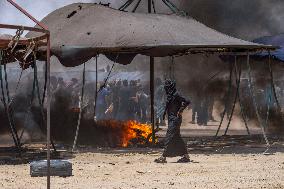
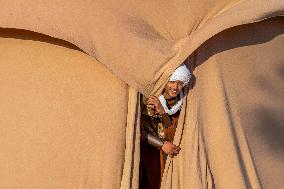
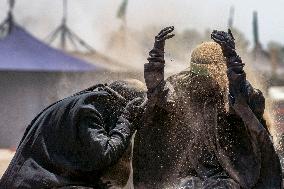
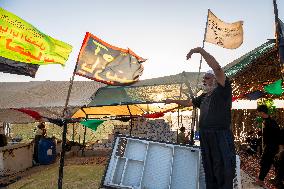
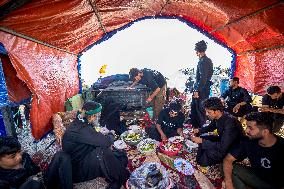
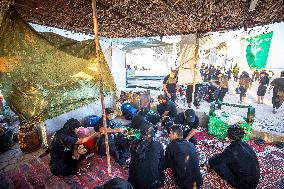
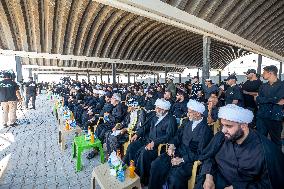
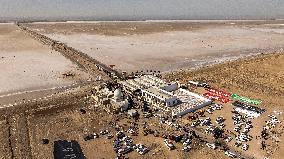
Participants perform traditional mourning rituals during the Chehlum procession in Prayagraj, India, on August 15, 2025. Chehlum, also known as Arbaeen, is a Shia Muslim religious observance held 40 days after Ashura to commemorate the martyrdom of Imam Hussein, the grandson of Prophet Muhammad, in the Battle of Karbala in the 7th century. Photo by Sanjay Kanojia/Middle East Images/ABACAPRESS.COM

  •  
Shia Muslim Chehlum - India

Shia Muslim Chehlum - India

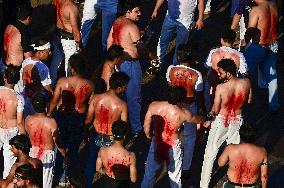
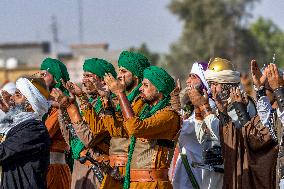
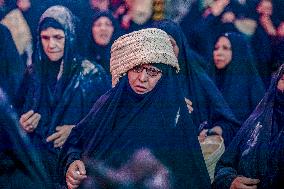
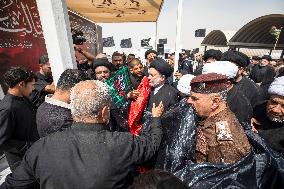
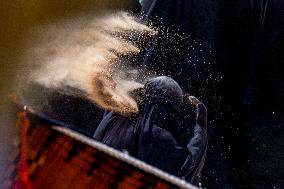
Shia Muslim devotees beat their chests during a Chehlum procession in Prayagraj, India, on August 15, 2025. Chehlum, also known as Arbaeen, is a Shia Muslim religious observance held 40 days after Ashura to commemorate the martyrdom of Imam Hussein, the grandson of Prophet Muhammad, in the Battle of Karbala in the 7th century. Photo by Sanjay Kanojia/Middle East Images/ABACAPRESS.COM

  •  
Shia Muslim Chehlum - India

Shia Muslim Chehlum - India

Participants perform traditional mourning rituals during the Chehlum procession in Prayagraj, India, on August 15, 2025. Chehlum, also known as Arbaeen, is a Shia Muslim religious observance held 40 days after Ashura to commemorate the martyrdom of Imam Hussein, the grandson of Prophet Muhammad, in the Battle of Karbala in the 7th century. Photo by Sanjay Kanojia/Middle East Images/ABACAPRESS.COM

  •  
Shia Muslim Chehlum - India

Shia Muslim Chehlum - India

Shia Muslim devotees beat their chests during a Chehlum procession in Prayagraj, India, on August 15, 2025. Chehlum, also known as Arbaeen, is a Shia Muslim religious observance held 40 days after Ashura to commemorate the martyrdom of Imam Hussein, the grandson of Prophet Muhammad, in the Battle of Karbala in the 7th century. Photo by Sanjay Kanojia/Middle East Images/ABACAPRESS.COM

  •  
Shia Muslim Chehlum - India

Shia Muslim Chehlum - India

Participants perform traditional mourning rituals during the Chehlum procession in Prayagraj, India, on August 15, 2025. Chehlum, also known as Arbaeen, is a Shia Muslim religious observance held 40 days after Ashura to commemorate the martyrdom of Imam Hussein, the grandson of Prophet Muhammad, in the Battle of Karbala in the 7th century. Photo by Sanjay Kanojia/Middle East Images/ABACAPRESS.COM

  •  
Shia Muslim Chehlum - India

Shia Muslim Chehlum - India

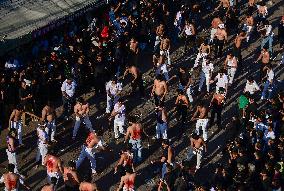
Participants perform traditional mourning rituals during the Chehlum procession in Prayagraj, India, on August 15, 2025. Chehlum, also known as Arbaeen, is a Shia Muslim religious observance held 40 days after Ashura to commemorate the martyrdom of Imam Hussein, the grandson of Prophet Muhammad, in the Battle of Karbala in the 7th century. Photo by Sanjay Kanojia/Middle East Images/ABACAPRESS.COM

  •  
Shia Muslim Chehlum - India

Shia Muslim Chehlum - India

Participants perform traditional mourning rituals during the Chehlum procession in Prayagraj, India, on August 15, 2025. Chehlum, also known as Arbaeen, is a Shia Muslim religious observance held 40 days after Ashura to commemorate the martyrdom of Imam Hussein, the grandson of Prophet Muhammad, in the Battle of Karbala in the 7th century. Photo by Sanjay Kanojia/Middle East Images/ABACAPRESS.COM

  •  
Shia Muslim Chehlum - India

Shia Muslim Chehlum - India

Participants perform traditional mourning rituals during the Chehlum procession in Prayagraj, India, on August 15, 2025. Chehlum, also known as Arbaeen, is a Shia Muslim religious observance held 40 days after Ashura to commemorate the martyrdom of Imam Hussein, the grandson of Prophet Muhammad, in the Battle of Karbala in the 7th century. Photo by Sanjay Kanojia/Middle East Images/ABACAPRESS.COM

  •  
Shia Muslim Chehlum - India

Shia Muslim Chehlum - India

Shia Muslim devotees beat their chests during a Chehlum procession in Prayagraj, India, on August 15, 2025. Chehlum, also known as Arbaeen, is a Shia Muslim religious observance held 40 days after Ashura to commemorate the martyrdom of Imam Hussein, the grandson of Prophet Muhammad, in the Battle of Karbala in the 7th century. Photo by Sanjay Kanojia/Middle East Images/ABACAPRESS.COM

  •  
Shia Muslim Chehlum - India

Shia Muslim Chehlum - India

Participants perform traditional mourning rituals during the Chehlum procession in Prayagraj, India, on August 15, 2025. Chehlum, also known as Arbaeen, is a Shia Muslim religious observance held 40 days after Ashura to commemorate the martyrdom of Imam Hussein, the grandson of Prophet Muhammad, in the Battle of Karbala in the 7th century. Photo by Sanjay Kanojia/Middle East Images/ABACAPRESS.COM

  •  
Shia Muslim Chehlum - India

Shia Muslim Chehlum - India

Shia Muslim devotees beat their chests during a Chehlum procession in Prayagraj, India, on August 15, 2025. Chehlum, also known as Arbaeen, is a Shia Muslim religious observance held 40 days after Ashura to commemorate the martyrdom of Imam Hussein, the grandson of Prophet Muhammad, in the Battle of Karbala in the 7th century. Photo by Sanjay Kanojia/Middle East Images/ABACAPRESS.COM

  •  
Shia Muslim Chehlum - India

Shia Muslim Chehlum - India

Shia Muslim devotees beat their chests during a Chehlum procession in Prayagraj, India, on August 15, 2025. Chehlum, also known as Arbaeen, is a Shia Muslim religious observance held 40 days after Ashura to commemorate the martyrdom of Imam Hussein, the grandson of Prophet Muhammad, in the Battle of Karbala in the 7th century. Photo by Sanjay Kanojia/Middle East Images/ABACAPRESS.COM

  •  
Karbala Rituals - Iraq

Karbala Rituals - Iraq

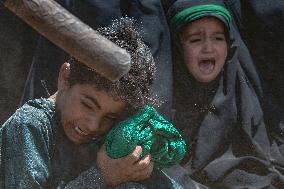
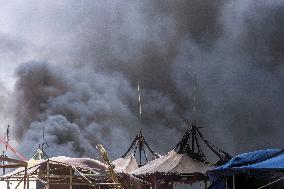
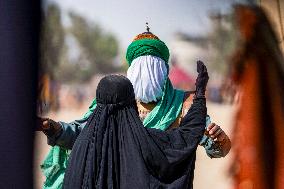
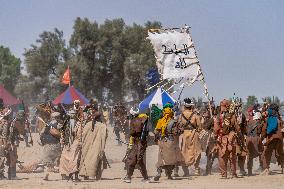
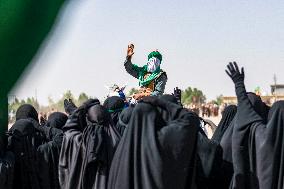
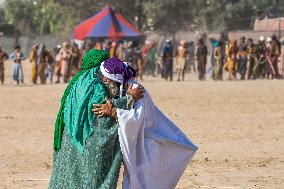
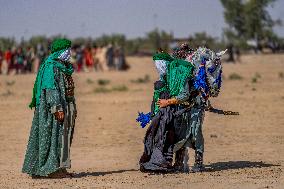
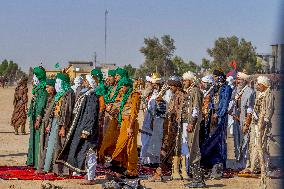
The representation of the incident of TAF by the people of the city of Al-Ghomas in Karbala on July 8, 2025. This theatrical reenactment, known as "Taf," commemorates the Battle of Karbala in 680 AD, where Imam Hussein, the grandson of the Prophet Muhammad, was martyred. Participants dress in traditional costumes and dramatize the events of Ashura to honor the sacrifice and stand for justice that Imam Hussein represents in Shia Islam. The annual performance attracts large crowds and serves as a powerful cultural and religious expression of devotion, grief, and historical memory. The city of Karbala becomes a focal point for mourning rituals during Muharram, reinforcing collective identity and spiritual connection for millions of Shia Muslims. Photo by Samer Al Husseini/Middle East Images/ABACAPRESS.COM

  •  
Karbala Rituals - Iraq

Karbala Rituals - Iraq

The representation of the incident of TAF by the people of the city of Al-Ghomas in Karbala on July 8, 2025. This theatrical reenactment, known as "Taf," commemorates the Battle of Karbala in 680 AD, where Imam Hussein, the grandson of the Prophet Muhammad, was martyred. Participants dress in traditional costumes and dramatize the events of Ashura to honor the sacrifice and stand for justice that Imam Hussein represents in Shia Islam. The annual performance attracts large crowds and serves as a powerful cultural and religious expression of devotion, grief, and historical memory. The city of Karbala becomes a focal point for mourning rituals during Muharram, reinforcing collective identity and spiritual connection for millions of Shia Muslims. Photo by Samer Al Husseini/Middle East Images/ABACAPRESS.COM

  •  
Karbala Rituals - Iraq

Karbala Rituals - Iraq

The representation of the incident of TAF by the people of the city of Al-Ghomas in Karbala on July 8, 2025. This theatrical reenactment, known as "Taf," commemorates the Battle of Karbala in 680 AD, where Imam Hussein, the grandson of the Prophet Muhammad, was martyred. Participants dress in traditional costumes and dramatize the events of Ashura to honor the sacrifice and stand for justice that Imam Hussein represents in Shia Islam. The annual performance attracts large crowds and serves as a powerful cultural and religious expression of devotion, grief, and historical memory. The city of Karbala becomes a focal point for mourning rituals during Muharram, reinforcing collective identity and spiritual connection for millions of Shia Muslims. Photo by Samer Al Husseini/Middle East Images/ABACAPRESS.COM

  •  
Karbala Rituals - Iraq

Karbala Rituals - Iraq

The representation of the incident of TAF by the people of the city of Al-Ghomas in Karbala on July 8, 2025. This theatrical reenactment, known as "Taf," commemorates the Battle of Karbala in 680 AD, where Imam Hussein, the grandson of the Prophet Muhammad, was martyred. Participants dress in traditional costumes and dramatize the events of Ashura to honor the sacrifice and stand for justice that Imam Hussein represents in Shia Islam. The annual performance attracts large crowds and serves as a powerful cultural and religious expression of devotion, grief, and historical memory. The city of Karbala becomes a focal point for mourning rituals during Muharram, reinforcing collective identity and spiritual connection for millions of Shia Muslims. Photo by Samer Al Husseini/Middle East Images/ABACAPRESS.COM

  •  
Karbala Rituals - Iraq

Karbala Rituals - Iraq

The representation of the incident of TAF by the people of the city of Al-Ghomas in Karbala on July 8, 2025. This theatrical reenactment, known as "Taf," commemorates the Battle of Karbala in 680 AD, where Imam Hussein, the grandson of the Prophet Muhammad, was martyred. Participants dress in traditional costumes and dramatize the events of Ashura to honor the sacrifice and stand for justice that Imam Hussein represents in Shia Islam. The annual performance attracts large crowds and serves as a powerful cultural and religious expression of devotion, grief, and historical memory. The city of Karbala becomes a focal point for mourning rituals during Muharram, reinforcing collective identity and spiritual connection for millions of Shia Muslims. Photo by Samer Al Husseini/Middle East Images/ABACAPRESS.COM

  •  
Karbala Rituals - Iraq

Karbala Rituals - Iraq

The representation of the incident of TAF by the people of the city of Al-Ghomas in Karbala on July 8, 2025. This theatrical reenactment, known as "Taf," commemorates the Battle of Karbala in 680 AD, where Imam Hussein, the grandson of the Prophet Muhammad, was martyred. Participants dress in traditional costumes and dramatize the events of Ashura to honor the sacrifice and stand for justice that Imam Hussein represents in Shia Islam. The annual performance attracts large crowds and serves as a powerful cultural and religious expression of devotion, grief, and historical memory. The city of Karbala becomes a focal point for mourning rituals during Muharram, reinforcing collective identity and spiritual connection for millions of Shia Muslims. Photo by Samer Al Husseini/Middle East Images/ABACAPRESS.COM

  •  
Karbala Rituals - Iraq

Karbala Rituals - Iraq

The representation of the incident of TAF by the people of the city of Al-Ghomas in Karbala on July 8, 2025. This theatrical reenactment, known as "Taf," commemorates the Battle of Karbala in 680 AD, where Imam Hussein, the grandson of the Prophet Muhammad, was martyred. Participants dress in traditional costumes and dramatize the events of Ashura to honor the sacrifice and stand for justice that Imam Hussein represents in Shia Islam. The annual performance attracts large crowds and serves as a powerful cultural and religious expression of devotion, grief, and historical memory. The city of Karbala becomes a focal point for mourning rituals during Muharram, reinforcing collective identity and spiritual connection for millions of Shia Muslims. Photo by Samer Al Husseini/Middle East Images/ABACAPRESS.COM

  •  
Karbala Rituals - Iraq

Karbala Rituals - Iraq

The representation of the incident of TAF by the people of the city of Al-Ghomas in Karbala on July 8, 2025. This theatrical reenactment, known as "Taf," commemorates the Battle of Karbala in 680 AD, where Imam Hussein, the grandson of the Prophet Muhammad, was martyred. Participants dress in traditional costumes and dramatize the events of Ashura to honor the sacrifice and stand for justice that Imam Hussein represents in Shia Islam. The annual performance attracts large crowds and serves as a powerful cultural and religious expression of devotion, grief, and historical memory. The city of Karbala becomes a focal point for mourning rituals during Muharram, reinforcing collective identity and spiritual connection for millions of Shia Muslims. Photo by Samer Al Husseini/Middle East Images/ABACAPRESS.COM

  •  
Karbala Rituals - Iraq

Karbala Rituals - Iraq

The representation of the incident of TAF by the people of the city of Al-Ghomas in Karbala on July 8, 2025. This theatrical reenactment, known as "Taf," commemorates the Battle of Karbala in 680 AD, where Imam Hussein, the grandson of the Prophet Muhammad, was martyred. Participants dress in traditional costumes and dramatize the events of Ashura to honor the sacrifice and stand for justice that Imam Hussein represents in Shia Islam. The annual performance attracts large crowds and serves as a powerful cultural and religious expression of devotion, grief, and historical memory. The city of Karbala becomes a focal point for mourning rituals during Muharram, reinforcing collective identity and spiritual connection for millions of Shia Muslims. Photo by Samer Al Husseini/Middle East Images/ABACAPRESS.COM

  •  
Karbala Rituals - Iraq

Karbala Rituals - Iraq

The representation of the incident of TAF by the people of the city of Al-Ghomas in Karbala on July 8, 2025. This theatrical reenactment, known as "Taf," commemorates the Battle of Karbala in 680 AD, where Imam Hussein, the grandson of the Prophet Muhammad, was martyred. Participants dress in traditional costumes and dramatize the events of Ashura to honor the sacrifice and stand for justice that Imam Hussein represents in Shia Islam. The annual performance attracts large crowds and serves as a powerful cultural and religious expression of devotion, grief, and historical memory. The city of Karbala becomes a focal point for mourning rituals during Muharram, reinforcing collective identity and spiritual connection for millions of Shia Muslims. Photo by Samer Al Husseini/Middle East Images/ABACAPRESS.COM

  •  
Karbala Rituals - Iraq

Karbala Rituals - Iraq

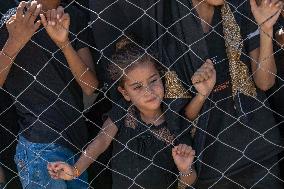
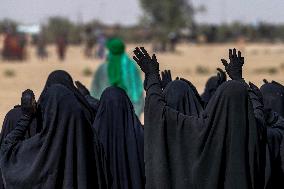
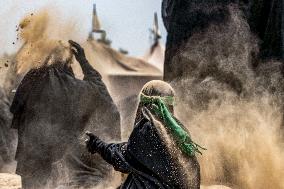
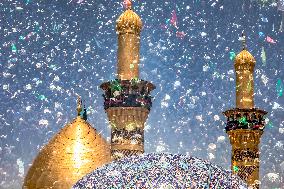
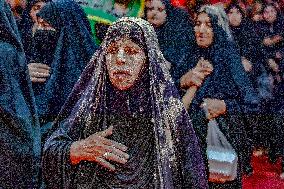
Mourning of Bani Assad on the 13th of Muharram in Karbala, Iraq. On July 9, 2025, Shiite Muslim mourners participate in the traditional commemoration known as the Mourning of Bani Assad, which takes place annually on the 13th of Muharram in the Islamic calendar. The ritual honors the women of the Bani Assad tribe who, according to tradition, buried the unrecognized bodies of Imam Hussein and his companions after the Battle of Karbala in 680 AD. Dressed in black, participants gather near the holy shrine of Imam Hussein, chanting elegies and performing mourning processions to express grief and solidarity. This deeply symbolic event reflects the enduring historical and spiritual significance of Karbala for Shiite communities across the world, especially during the sacred month of Muharram, which marks the martyrdom of one of the most revered figures in Shia Islam. Photo by Samer Al Husseini/Middle East Images/ABACAPRESS.COM

  •  
Karbala Rituals - Iraq

Karbala Rituals - Iraq

The representation of the incident of TAF by the people of the city of Al-Ghomas in Karbala on July 8, 2025. This theatrical reenactment, known as "Taf," commemorates the Battle of Karbala in 680 AD, where Imam Hussein, the grandson of the Prophet Muhammad, was martyred. Participants dress in traditional costumes and dramatize the events of Ashura to honor the sacrifice and stand for justice that Imam Hussein represents in Shia Islam. The annual performance attracts large crowds and serves as a powerful cultural and religious expression of devotion, grief, and historical memory. The city of Karbala becomes a focal point for mourning rituals during Muharram, reinforcing collective identity and spiritual connection for millions of Shia Muslims. Photo by Samer Al Husseini/Middle East Images/ABACAPRESS.COM

  •  
Karbala Rituals - Iraq

Karbala Rituals - Iraq

The representation of the incident of TAF by the people of the city of Al-Ghomas in Karbala on July 8, 2025. This theatrical reenactment, known as "Taf," commemorates the Battle of Karbala in 680 AD, where Imam Hussein, the grandson of the Prophet Muhammad, was martyred. Participants dress in traditional costumes and dramatize the events of Ashura to honor the sacrifice and stand for justice that Imam Hussein represents in Shia Islam. The annual performance attracts large crowds and serves as a powerful cultural and religious expression of devotion, grief, and historical memory. The city of Karbala becomes a focal point for mourning rituals during Muharram, reinforcing collective identity and spiritual connection for millions of Shia Muslims. Photo by Samer Al Husseini/Middle East Images/ABACAPRESS.COM

  •  
Karbala Rituals - Iraq

Karbala Rituals - Iraq

The representation of the incident of TAF by the people of the city of Al-Ghomas in Karbala on July 8, 2025. This theatrical reenactment, known as "Taf," commemorates the Battle of Karbala in 680 AD, where Imam Hussein, the grandson of the Prophet Muhammad, was martyred. Participants dress in traditional costumes and dramatize the events of Ashura to honor the sacrifice and stand for justice that Imam Hussein represents in Shia Islam. The annual performance attracts large crowds and serves as a powerful cultural and religious expression of devotion, grief, and historical memory. The city of Karbala becomes a focal point for mourning rituals during Muharram, reinforcing collective identity and spiritual connection for millions of Shia Muslims. Photo by Samer Al Husseini/Middle East Images/ABACAPRESS.COM

  •  
Karbala Rituals - Iraq

Karbala Rituals - Iraq

Mourning of Bani Assad on the 13th of Muharram in Karbala, Iraq. On July 9, 2025, Shiite Muslim mourners participate in the traditional commemoration known as the Mourning of Bani Assad, which takes place annually on the 13th of Muharram in the Islamic calendar. The ritual honors the women of the Bani Assad tribe who, according to tradition, buried the unrecognized bodies of Imam Hussein and his companions after the Battle of Karbala in 680 AD. Dressed in black, participants gather near the holy shrine of Imam Hussein, chanting elegies and performing mourning processions to express grief and solidarity. This deeply symbolic event reflects the enduring historical and spiritual significance of Karbala for Shiite communities across the world, especially during the sacred month of Muharram, which marks the martyrdom of one of the most revered figures in Shia Islam. Photo by Samer Al Husseini/Middle East Images/ABACAPRESS.COM

  •  
Karbala Rituals - Iraq

Karbala Rituals - Iraq

The representation of the incident of TAF by the people of the city of Al-Ghomas in Karbala on July 8, 2025. This theatrical reenactment, known as "Taf," commemorates the Battle of Karbala in 680 AD, where Imam Hussein, the grandson of the Prophet Muhammad, was martyred. Participants dress in traditional costumes and dramatize the events of Ashura to honor the sacrifice and stand for justice that Imam Hussein represents in Shia Islam. The annual performance attracts large crowds and serves as a powerful cultural and religious expression of devotion, grief, and historical memory. The city of Karbala becomes a focal point for mourning rituals during Muharram, reinforcing collective identity and spiritual connection for millions of Shia Muslims. Photo by Samer Al Husseini/Middle East Images/ABACAPRESS.COM

  •  
Karbala Rituals - Iraq

Karbala Rituals - Iraq

Mourning of Bani Assad on the 13th of Muharram in Karbala, Iraq. On July 9, 2025, Shiite Muslim mourners participate in the traditional commemoration known as the Mourning of Bani Assad, which takes place annually on the 13th of Muharram in the Islamic calendar. The ritual honors the women of the Bani Assad tribe who, according to tradition, buried the unrecognized bodies of Imam Hussein and his companions after the Battle of Karbala in 680 AD. Dressed in black, participants gather near the holy shrine of Imam Hussein, chanting elegies and performing mourning processions to express grief and solidarity. This deeply symbolic event reflects the enduring historical and spiritual significance of Karbala for Shiite communities across the world, especially during the sacred month of Muharram, which marks the martyrdom of one of the most revered figures in Shia Islam. Photo by Samer Al Husseini/Middle East Images/ABACAPRESS.COM

  •  
Karbala Rituals - Iraq

Karbala Rituals - Iraq

The representation of the incident of TAF by the people of the city of Al-Ghomas in Karbala on July 8, 2025. This theatrical reenactment, known as "Taf," commemorates the Battle of Karbala in 680 AD, where Imam Hussein, the grandson of the Prophet Muhammad, was martyred. Participants dress in traditional costumes and dramatize the events of Ashura to honor the sacrifice and stand for justice that Imam Hussein represents in Shia Islam. The annual performance attracts large crowds and serves as a powerful cultural and religious expression of devotion, grief, and historical memory. The city of Karbala becomes a focal point for mourning rituals during Muharram, reinforcing collective identity and spiritual connection for millions of Shia Muslims. Photo by Samer Al Husseini/Middle East Images/ABACAPRESS.COM

  •  
Karbala Rituals - Iraq

Karbala Rituals - Iraq

The representation of the incident of TAF by the people of the city of Al-Ghomas in Karbala on July 8, 2025. This theatrical reenactment, known as "Taf," commemorates the Battle of Karbala in 680 AD, where Imam Hussein, the grandson of the Prophet Muhammad, was martyred. Participants dress in traditional costumes and dramatize the events of Ashura to honor the sacrifice and stand for justice that Imam Hussein represents in Shia Islam. The annual performance attracts large crowds and serves as a powerful cultural and religious expression of devotion, grief, and historical memory. The city of Karbala becomes a focal point for mourning rituals during Muharram, reinforcing collective identity and spiritual connection for millions of Shia Muslims. Photo by Samer Al Husseini/Middle East Images/ABACAPRESS.COM

  •  
Karbala Rituals - Iraq

Karbala Rituals - Iraq

Mourning of Bani Assad on the 13th of Muharram in Karbala, Iraq. On July 9, 2025, Shiite Muslim mourners participate in the traditional commemoration known as the Mourning of Bani Assad, which takes place annually on the 13th of Muharram in the Islamic calendar. The ritual honors the women of the Bani Assad tribe who, according to tradition, buried the unrecognized bodies of Imam Hussein and his companions after the Battle of Karbala in 680 AD. Dressed in black, participants gather near the holy shrine of Imam Hussein, chanting elegies and performing mourning processions to express grief and solidarity. This deeply symbolic event reflects the enduring historical and spiritual significance of Karbala for Shiite communities across the world, especially during the sacred month of Muharram, which marks the martyrdom of one of the most revered figures in Shia Islam. Photo by Samer Al Husseini/Middle East Images/ABACAPRESS.COM

  •  
Karbala Rituals - Iraq

Karbala Rituals - Iraq

The representation of the incident of TAF by the people of the city of Al-Ghomas in Karbala on July 8, 2025. This theatrical reenactment, known as "Taf," commemorates the Battle of Karbala in 680 AD, where Imam Hussein, the grandson of the Prophet Muhammad, was martyred. Participants dress in traditional costumes and dramatize the events of Ashura to honor the sacrifice and stand for justice that Imam Hussein represents in Shia Islam. The annual performance attracts large crowds and serves as a powerful cultural and religious expression of devotion, grief, and historical memory. The city of Karbala becomes a focal point for mourning rituals during Muharram, reinforcing collective identity and spiritual connection for millions of Shia Muslims. Photo by Samer Al Husseini/Middle East Images/ABACAPRESS.COM

  •  
Karbala Rituals - Iraq

Karbala Rituals - Iraq

Mourning of Bani Assad on the 13th of Muharram in Karbala, Iraq. On July 9, 2025, Shiite Muslim mourners participate in the traditional commemoration known as the Mourning of Bani Assad, which takes place annually on the 13th of Muharram in the Islamic calendar. The ritual honors the women of the Bani Assad tribe who, according to tradition, buried the unrecognized bodies of Imam Hussein and his companions after the Battle of Karbala in 680 AD. Dressed in black, participants gather near the holy shrine of Imam Hussein, chanting elegies and performing mourning processions to express grief and solidarity. This deeply symbolic event reflects the enduring historical and spiritual significance of Karbala for Shiite communities across the world, especially during the sacred month of Muharram, which marks the martyrdom of one of the most revered figures in Shia Islam. Photo by Samer Al Husseini/Middle East Images/ABACAPRESS.COM

  •  
Karbala Rituals - Iraq

Karbala Rituals - Iraq

The representation of the incident of TAF by the people of the city of Al-Ghomas in Karbala on July 8, 2025. This theatrical reenactment, known as "Taf," commemorates the Battle of Karbala in 680 AD, where Imam Hussein, the grandson of the Prophet Muhammad, was martyred. Participants dress in traditional costumes and dramatize the events of Ashura to honor the sacrifice and stand for justice that Imam Hussein represents in Shia Islam. The annual performance attracts large crowds and serves as a powerful cultural and religious expression of devotion, grief, and historical memory. The city of Karbala becomes a focal point for mourning rituals during Muharram, reinforcing collective identity and spiritual connection for millions of Shia Muslims. Photo by Samer Al Husseini/Middle East Images/ABACAPRESS.COM

  •  
Karbala Rituals - Iraq

Karbala Rituals - Iraq

The representation of the incident of TAF by the people of the city of Al-Ghomas in Karbala on July 8, 2025. This theatrical reenactment, known as "Taf," commemorates the Battle of Karbala in 680 AD, where Imam Hussein, the grandson of the Prophet Muhammad, was martyred. Participants dress in traditional costumes and dramatize the events of Ashura to honor the sacrifice and stand for justice that Imam Hussein represents in Shia Islam. The annual performance attracts large crowds and serves as a powerful cultural and religious expression of devotion, grief, and historical memory. The city of Karbala becomes a focal point for mourning rituals during Muharram, reinforcing collective identity and spiritual connection for millions of Shia Muslims. Photo by Samer Al Husseini/Middle East Images/ABACAPRESS.COM

  •  
Pilgrims Begin Forty Day Trek to Karbala - Iraq

Pilgrims Begin Forty Day Trek to Karbala - Iraq

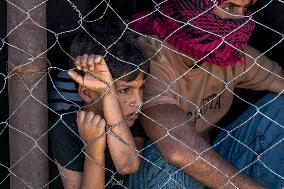
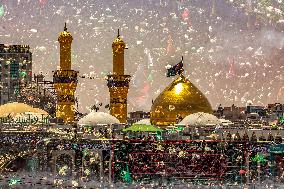
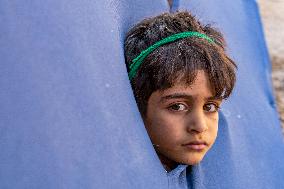
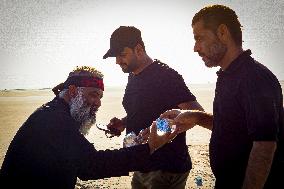
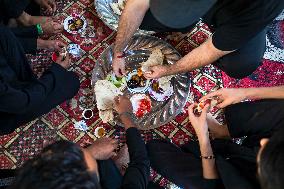
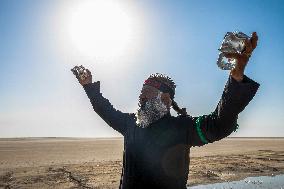
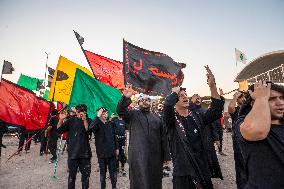
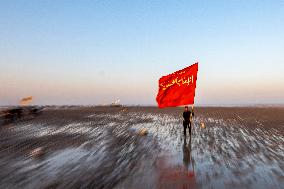
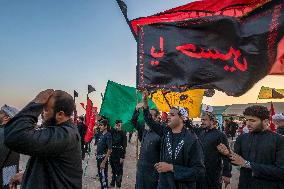
The first procession in Ras Al-Bishara marks the departure of pilgrims on foot to the holy city of Karbala in southern Iraq on July 18, 2025. The annual pilgrimage, known as Arbaeen if occurring during its traditional period, or in this case a prelude to it, draws millions of Shia Muslims from across Iraq and neighboring countries. Pilgrims walk for hundreds of kilometers to honor the martyrdom of Imam Hussein, the grandson of the Prophet Muhammad, who was killed in the Battle of Karbala in 680 CE. The journey is not only religious but also deeply symbolic of faith, resilience, and communal solidarity. In Ras Al-Bishara, families, community leaders, and volunteers gather to send off the first groups of walkers, offering food, water, and prayers as part of long-standing traditions of hospitality and devotion. Photo by Samer Al Husseini/Middle East Images/ABACAPRESS.COM

  •  
Pilgrims Begin Forty Day Trek to Karbala - Iraq

Pilgrims Begin Forty Day Trek to Karbala - Iraq

The first procession in Ras Al-Bishara marks the departure of pilgrims on foot to the holy city of Karbala in southern Iraq on July 18, 2025. The annual pilgrimage, known as Arbaeen if occurring during its traditional period, or in this case a prelude to it, draws millions of Shia Muslims from across Iraq and neighboring countries. Pilgrims walk for hundreds of kilometers to honor the martyrdom of Imam Hussein, the grandson of the Prophet Muhammad, who was killed in the Battle of Karbala in 680 CE. The journey is not only religious but also deeply symbolic of faith, resilience, and communal solidarity. In Ras Al-Bishara, families, community leaders, and volunteers gather to send off the first groups of walkers, offering food, water, and prayers as part of long-standing traditions of hospitality and devotion. Photo by Samer Al Husseini/Middle East Images/ABACAPRESS.COM

  •  
Pilgrims Begin Forty Day Trek to Karbala - Iraq

Pilgrims Begin Forty Day Trek to Karbala - Iraq

The first procession in Ras Al-Bishara marks the departure of pilgrims on foot to the holy city of Karbala in southern Iraq on July 18, 2025. The annual pilgrimage, known as Arbaeen if occurring during its traditional period, or in this case a prelude to it, draws millions of Shia Muslims from across Iraq and neighboring countries. Pilgrims walk for hundreds of kilometers to honor the martyrdom of Imam Hussein, the grandson of the Prophet Muhammad, who was killed in the Battle of Karbala in 680 CE. The journey is not only religious but also deeply symbolic of faith, resilience, and communal solidarity. In Ras Al-Bishara, families, community leaders, and volunteers gather to send off the first groups of walkers, offering food, water, and prayers as part of long-standing traditions of hospitality and devotion. Photo by Samer Al Husseini/Middle East Images/ABACAPRESS.COM

  •  
Pilgrims Begin Forty Day Trek to Karbala - Iraq

Pilgrims Begin Forty Day Trek to Karbala - Iraq

The first procession in Ras Al-Bishara marks the departure of pilgrims on foot to the holy city of Karbala in southern Iraq on July 18, 2025. The annual pilgrimage, known as Arbaeen if occurring during its traditional period, or in this case a prelude to it, draws millions of Shia Muslims from across Iraq and neighboring countries. Pilgrims walk for hundreds of kilometers to honor the martyrdom of Imam Hussein, the grandson of the Prophet Muhammad, who was killed in the Battle of Karbala in 680 CE. The journey is not only religious but also deeply symbolic of faith, resilience, and communal solidarity. In Ras Al-Bishara, families, community leaders, and volunteers gather to send off the first groups of walkers, offering food, water, and prayers as part of long-standing traditions of hospitality and devotion. Photo by Samer Al Husseini/Middle East Images/ABACAPRESS.COM

  •  
Pilgrims Begin Forty Day Trek to Karbala - Iraq

Pilgrims Begin Forty Day Trek to Karbala - Iraq

The first procession in Ras Al-Bishara marks the departure of pilgrims on foot to the holy city of Karbala in southern Iraq on July 18, 2025. The annual pilgrimage, known as Arbaeen if occurring during its traditional period, or in this case a prelude to it, draws millions of Shia Muslims from across Iraq and neighboring countries. Pilgrims walk for hundreds of kilometers to honor the martyrdom of Imam Hussein, the grandson of the Prophet Muhammad, who was killed in the Battle of Karbala in 680 CE. The journey is not only religious but also deeply symbolic of faith, resilience, and communal solidarity. In Ras Al-Bishara, families, community leaders, and volunteers gather to send off the first groups of walkers, offering food, water, and prayers as part of long-standing traditions of hospitality and devotion. Photo by Samer Al Husseini/Middle East Images/ABACAPRESS.COM

  •  
Pilgrims Begin Forty Day Trek to Karbala - Iraq

Pilgrims Begin Forty Day Trek to Karbala - Iraq

The first procession in Ras Al-Bishara marks the departure of pilgrims on foot to the holy city of Karbala in southern Iraq on July 18, 2025. The annual pilgrimage, known as Arbaeen if occurring during its traditional period, or in this case a prelude to it, draws millions of Shia Muslims from across Iraq and neighboring countries. Pilgrims walk for hundreds of kilometers to honor the martyrdom of Imam Hussein, the grandson of the Prophet Muhammad, who was killed in the Battle of Karbala in 680 CE. The journey is not only religious but also deeply symbolic of faith, resilience, and communal solidarity. In Ras Al-Bishara, families, community leaders, and volunteers gather to send off the first groups of walkers, offering food, water, and prayers as part of long-standing traditions of hospitality and devotion. Photo by Samer Al Husseini/Middle East Images/ABACAPRESS.COM

  •  
Pilgrims Begin Forty Day Trek to Karbala - Iraq

Pilgrims Begin Forty Day Trek to Karbala - Iraq

The first procession in Ras Al-Bishara marks the departure of pilgrims on foot to the holy city of Karbala in southern Iraq on July 18, 2025. The annual pilgrimage, known as Arbaeen if occurring during its traditional period, or in this case a prelude to it, draws millions of Shia Muslims from across Iraq and neighboring countries. Pilgrims walk for hundreds of kilometers to honor the martyrdom of Imam Hussein, the grandson of the Prophet Muhammad, who was killed in the Battle of Karbala in 680 CE. The journey is not only religious but also deeply symbolic of faith, resilience, and communal solidarity. In Ras Al-Bishara, families, community leaders, and volunteers gather to send off the first groups of walkers, offering food, water, and prayers as part of long-standing traditions of hospitality and devotion. Photo by Samer Al Husseini/Middle East Images/ABACAPRESS.COM

  •  
Pilgrims Begin Forty Day Trek to Karbala - Iraq

Pilgrims Begin Forty Day Trek to Karbala - Iraq

The first procession in Ras Al-Bishara marks the departure of pilgrims on foot to the holy city of Karbala in southern Iraq on July 18, 2025. The annual pilgrimage, known as Arbaeen if occurring during its traditional period, or in this case a prelude to it, draws millions of Shia Muslims from across Iraq and neighboring countries. Pilgrims walk for hundreds of kilometers to honor the martyrdom of Imam Hussein, the grandson of the Prophet Muhammad, who was killed in the Battle of Karbala in 680 CE. The journey is not only religious but also deeply symbolic of faith, resilience, and communal solidarity. In Ras Al-Bishara, families, community leaders, and volunteers gather to send off the first groups of walkers, offering food, water, and prayers as part of long-standing traditions of hospitality and devotion. Photo by Samer Al Husseini/Middle East Images/ABACAPRESS.COM

  •  
Pilgrims Begin Forty Day Trek to Karbala - Iraq

Pilgrims Begin Forty Day Trek to Karbala - Iraq

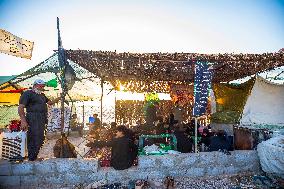
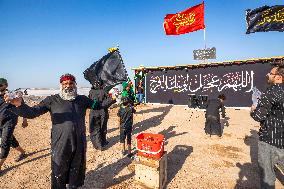
The forty-day walking festival from Ras Al-Bisha to Karbala. Iraqi pilgrims begin the symbolic Arbaeen journey from Ras Al-Bisha, located in southern Iraq, to the holy city of Karbala. Captured on July 18, 2025, this ritual marks the start of the 40-day spiritual trek ahead of Arbaeen, one of the largest religious gatherings in the world. Devotees commemorate the martyrdom of Imam Hussein, the grandson of Prophet Muhammad, who was killed in the Battle of Karbala in 680 AD. Along the way, participants receive food, water, and shelter from volunteers at service tents (mawakib), demonstrating hospitality and religious solidarity. Many of the pilgrims walk hundreds of kilometers, bearing flags and religious symbols, chanting, and praying, enduring the scorching summer heat as a testament to their faith and sacrifice. The journey reflects a deeply rooted tradition of devotion and resilience in Shiite Muslim culture. Photo by Samer Al Husseini/Middle East Images/ABACAPRESS.COM

  •  
Pilgrims Begin Forty Day Trek to Karbala - Iraq

Pilgrims Begin Forty Day Trek to Karbala - Iraq

The forty-day walking festival from Ras Al-Bisha to Karbala. Iraqi pilgrims begin the symbolic Arbaeen journey from Ras Al-Bisha, located in southern Iraq, to the holy city of Karbala. Captured on July 18, 2025, this ritual marks the start of the 40-day spiritual trek ahead of Arbaeen, one of the largest religious gatherings in the world. Devotees commemorate the martyrdom of Imam Hussein, the grandson of Prophet Muhammad, who was killed in the Battle of Karbala in 680 AD. Along the way, participants receive food, water, and shelter from volunteers at service tents (mawakib), demonstrating hospitality and religious solidarity. Many of the pilgrims walk hundreds of kilometers, bearing flags and religious symbols, chanting, and praying, enduring the scorching summer heat as a testament to their faith and sacrifice. The journey reflects a deeply rooted tradition of devotion and resilience in Shiite Muslim culture. Photo by Samer Al Husseini/Middle East Images/ABACAPRESS.COM

  •  
Pilgrims Begin Forty Day Trek to Karbala - Iraq

Pilgrims Begin Forty Day Trek to Karbala - Iraq

The forty-day walking festival from Ras Al-Bisha to Karbala. Iraqi pilgrims begin the symbolic Arbaeen journey from Ras Al-Bisha, located in southern Iraq, to the holy city of Karbala. Captured on July 18, 2025, this ritual marks the start of the 40-day spiritual trek ahead of Arbaeen, one of the largest religious gatherings in the world. Devotees commemorate the martyrdom of Imam Hussein, the grandson of Prophet Muhammad, who was killed in the Battle of Karbala in 680 AD. Along the way, participants receive food, water, and shelter from volunteers at service tents (mawakib), demonstrating hospitality and religious solidarity. Many of the pilgrims walk hundreds of kilometers, bearing flags and religious symbols, chanting, and praying, enduring the scorching summer heat as a testament to their faith and sacrifice. The journey reflects a deeply rooted tradition of devotion and resilience in Shiite Muslim culture. Photo by Samer Al Husseini/Middle East Images/ABACAPRESS.COM

  •  
Pilgrims Begin Forty Day Trek to Karbala - Iraq

Pilgrims Begin Forty Day Trek to Karbala - Iraq

The forty-day walking festival from Ras Al-Bisha to Karbala. Iraqi pilgrims begin the symbolic Arbaeen journey from Ras Al-Bisha, located in southern Iraq, to the holy city of Karbala. Captured on July 18, 2025, this ritual marks the start of the 40-day spiritual trek ahead of Arbaeen, one of the largest religious gatherings in the world. Devotees commemorate the martyrdom of Imam Hussein, the grandson of Prophet Muhammad, who was killed in the Battle of Karbala in 680 AD. Along the way, participants receive food, water, and shelter from volunteers at service tents (mawakib), demonstrating hospitality and religious solidarity. Many of the pilgrims walk hundreds of kilometers, bearing flags and religious symbols, chanting, and praying, enduring the scorching summer heat as a testament to their faith and sacrifice. The journey reflects a deeply rooted tradition of devotion and resilience in Shiite Muslim culture. Photo by Samer Al Husseini/Middle East Images/ABACAPRESS.COM

  •  
Pilgrims Begin Forty Day Trek to Karbala - Iraq

Pilgrims Begin Forty Day Trek to Karbala - Iraq

The forty-day walking festival from Ras Al-Bisha to Karbala. Iraqi pilgrims begin the symbolic Arbaeen journey from Ras Al-Bisha, located in southern Iraq, to the holy city of Karbala. Captured on July 18, 2025, this ritual marks the start of the 40-day spiritual trek ahead of Arbaeen, one of the largest religious gatherings in the world. Devotees commemorate the martyrdom of Imam Hussein, the grandson of Prophet Muhammad, who was killed in the Battle of Karbala in 680 AD. Along the way, participants receive food, water, and shelter from volunteers at service tents (mawakib), demonstrating hospitality and religious solidarity. Many of the pilgrims walk hundreds of kilometers, bearing flags and religious symbols, chanting, and praying, enduring the scorching summer heat as a testament to their faith and sacrifice. The journey reflects a deeply rooted tradition of devotion and resilience in Shiite Muslim culture. Photo by Samer Al Husseini/Middle East Images/ABACAPRESS.COM

  •  
Pilgrims Begin Forty Day Trek to Karbala - Iraq

Pilgrims Begin Forty Day Trek to Karbala - Iraq

The forty-day walking festival from Ras Al-Bisha to Karbala. Iraqi pilgrims begin the symbolic Arbaeen journey from Ras Al-Bisha, located in southern Iraq, to the holy city of Karbala. Captured on July 18, 2025, this ritual marks the start of the 40-day spiritual trek ahead of Arbaeen, one of the largest religious gatherings in the world. Devotees commemorate the martyrdom of Imam Hussein, the grandson of Prophet Muhammad, who was killed in the Battle of Karbala in 680 AD. Along the way, participants receive food, water, and shelter from volunteers at service tents (mawakib), demonstrating hospitality and religious solidarity. Many of the pilgrims walk hundreds of kilometers, bearing flags and religious symbols, chanting, and praying, enduring the scorching summer heat as a testament to their faith and sacrifice. The journey reflects a deeply rooted tradition of devotion and resilience in Shiite Muslim culture. Photo by Samer Al Husseini/Middle East Images/ABACAPRESS.COM

  • Main
  • Top
  • Editorial
  • Creative
  • About Us
  • About ILG
  • Terms of use
  • Company
  • BEHIND
  • Price List
  • Single Plan
  • Monthly Plan
  • Services
  • Shooting
  • Rights Clearance
  • Support
  • FAQ
  • How To Buy
  • Contact Us
  • Become a Partner

© KYODO NEWS IMAGES INC

All Rights Reserved.

  • Editorial
  • Olympics
  • News
  • Sports
  • Japan
  • Tech
  • Royal
  • Disaster
  • NorthKorea
  • Old Japan
  • SNS
  • Creative
  • Food
  • Japan
  • Landscape
  • Animal
  • Popular
  • #Ukraine
  • #China
  • #coronavirus
  • #N. Korea
  • #Thailand
  • #Russia
  • #Ukraine
  • #China
  • #coronavirus
  • #N. Korea
  • #Thailand
  • #Russia
  • Food
  • Japan
  • Landscape
  • Animal
  • Olympics
  • News
  • Sports
  • Japan
  • Tech
  • Royal
  • Disaster
  • NorthKorea
  • Old Japan
  • SNS